
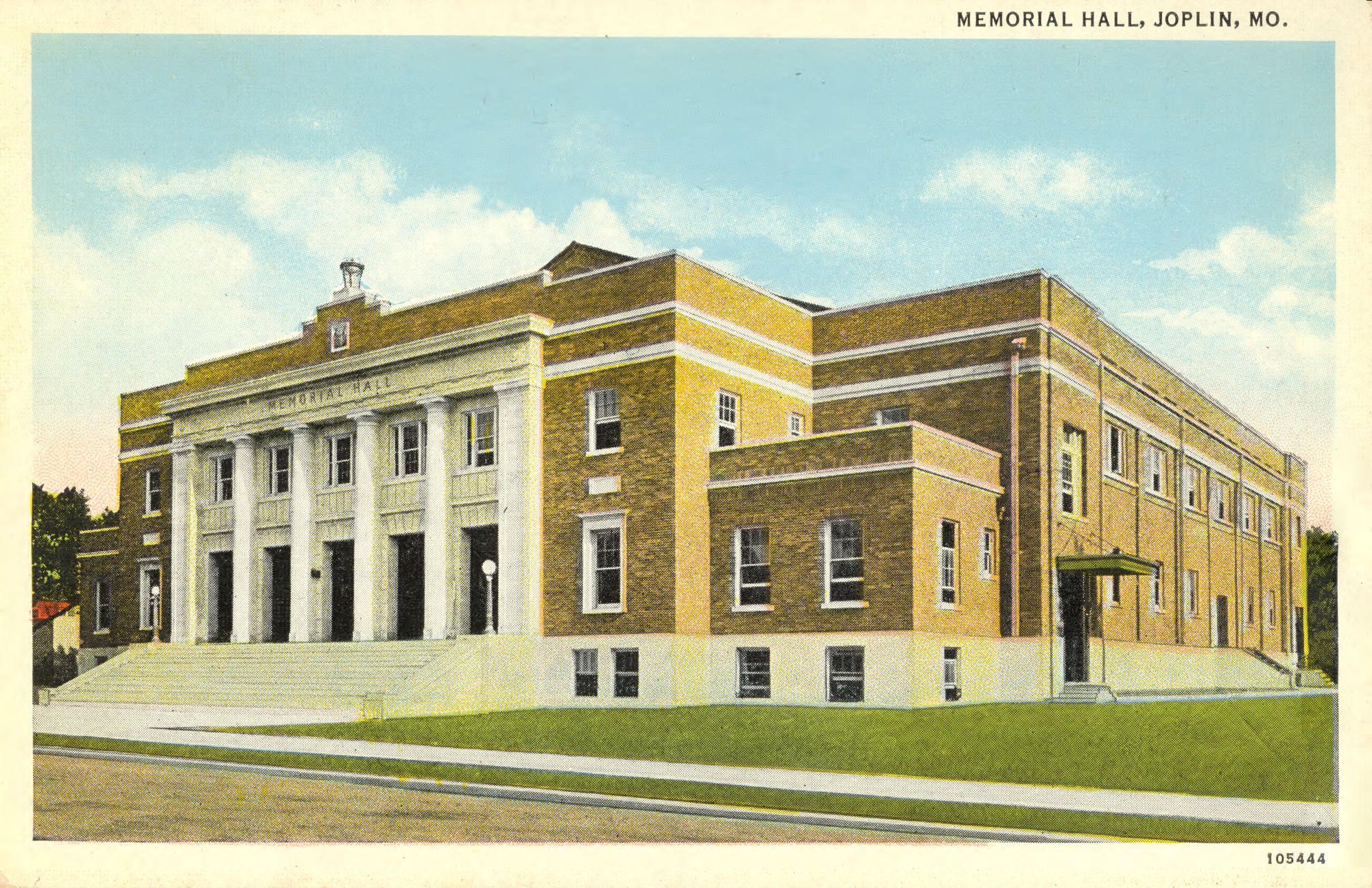
Robert S. Thurman American Legion Post 13 · Joplin, Missouri
The hall began
with the Legion.
Before Memorial Hall became Joplin’s great civic stage, local veterans and the Women’s Auxiliary organized a campaign to build it—then made the finished hall their home.
The essential story
They did not simply
move into the hall.
They helped create it.
Robert S. Thurman American Legion Post 13 formed in 1919, as Joplin veterans returned from the First World War. By January 1920, the Post and its Women’s Auxiliary were making preliminary plans for a memorial building.
In 1923, Post commander W. D. Myers led the public campaign for a city bond issue. Meetings, newspaper appeals, and civic organizing carried the proposal to voters, who approved it by roughly three to one.
Memorial Hall was publicly financed and city-owned—but the Legion supplied much of the original momentum.
A connection across a century
From an idea
to a home.
-
1919
Post 13 is formed
Joplin veterans organize a local American Legion post in the first year of the national organization.
-
1920
The memorial idea takes shape
The Post and its Women’s Auxiliary begin planning a permanent memorial and community gathering place.
-
1923
Veterans take the case to Joplin
Post 13 helps lead the bond campaign. Voters authorize the municipal project by a decisive margin.
-
1925
The new hall opens
The building includes dedicated rooms for the Legion and Auxiliary. Missouri Legion commander E. M. Stayton speaks at the October 18 dedication.
-
Today
The relationship is still alive
Post 13 meets away from the closed hall, while the current rehabilitation proposal reserves a new room for the Post inside a restored Memorial Hall.
Ownership and stewardship
Whose hall
was it?
The most accurate answer is a partnership: municipal ownership, veteran leadership, and public use. That distinction explains why the building could be both Joplin’s civic auditorium and Post 13’s long-time home.
The City of Joplin
Issued the bonds, owned the building, and operated it as a municipal memorial and auditorium.
American Legion Post 13
Organized support, occupied dedicated quarters, sponsored events, and kept the memorial mission visible.
Memorial Hall became the meeting point: a veterans memorial, a Legion home, and a public gathering place for the entire Four-State region.
The name behind Post 13
Federal casualty record · 1918Robert S.
Thurman
- Rank
- Private
- Home
- Joplin
- Status
- Killed in action
The Post’s name most likely honors a Joplin soldier lost in the First World War.
The federal Official Bulletin lists Private Robert S. Thurman among those killed in action in 1918. Its casualty notice identifies his next of kin as Anderson W. Thurman of 427 North Moffett Avenue.
Read the 1918 casualty noticeMore than meetings
The Legion made
the hall useful.
Post 13’s connection was expressed through public programs as much as through its clubrooms. The Legion and its wider family helped turn remembrance into ongoing service.
Events and athletics
Legion-sponsored boxing, Golden Gloves, wrestling, dances, concerts, and veterans programs brought regular life to the building.
Patriotic observance
The city formalized free use of the hall for several patriotic days in 1958, reinforcing its role as a place of civic remembrance.
The Legion family
The Women’s Auxiliary was present at the hall’s beginning. Later, the Sons of the American Legion and Legion Riders extended that service network.
Service after the tornado
After the 2011 tornado, the Post, Auxiliary, Sons, and Riders helped veterans and military families and supported the Joplin Association for the Blind.
The proposed next chapter
A return
home.
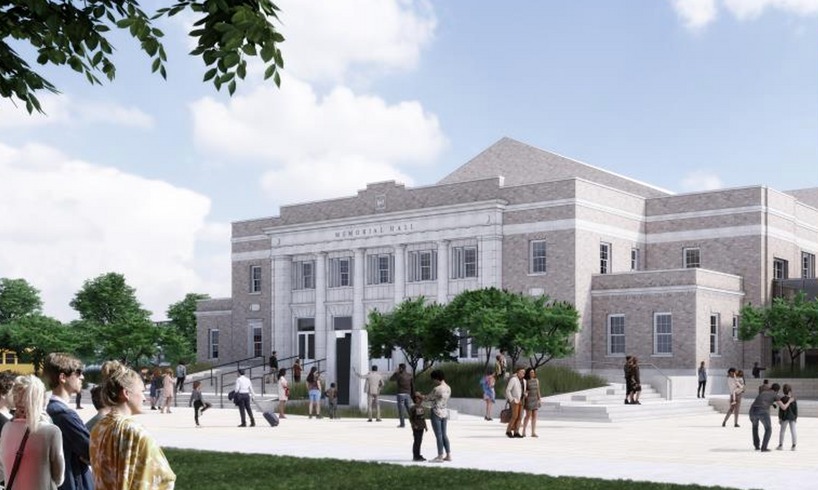
When the auditorium closed in 2020, Post 13 lost access to its historic home. The current Friends of Joplin Memorial Hall rehabilitation proposal would create a new Post 13 room on the second floor while preserving the building’s war memorials.
That return is a plan, not yet a completed project. As of August 2026, the City and Friends have a formal framework for rehabilitation, but construction has not begun and major financing steps remain.
Explore the preservation plan“The Legion’s place in Memorial Hall is not an afterthought. It is part of the building’s original purpose.”
One century of connectionResearch notes
Built from
the record.
This page draws primarily on public records and contemporary reporting. Historical conclusions are stated with care where the surviving evidence is incomplete.
Research reviewed through August 1, 2026.